The Shaving Cadre
You are using an out of date browser. It may not display this or other websites correctly.
You should upgrade or use an alternative browser.
You should upgrade or use an alternative browser.
Beekeeping
- Thread starter Spider
- Start date


Get him drunk enough....and you won't have to ask.How can we get our hands on your Boo-Bees?

If you put your hands on my Boo-Bees, you're likely to get stung!How can we get our hands on your Boo-Bees
But in a good way, right??If you put your hands on my Boo-Bees, you're likely to get stung!
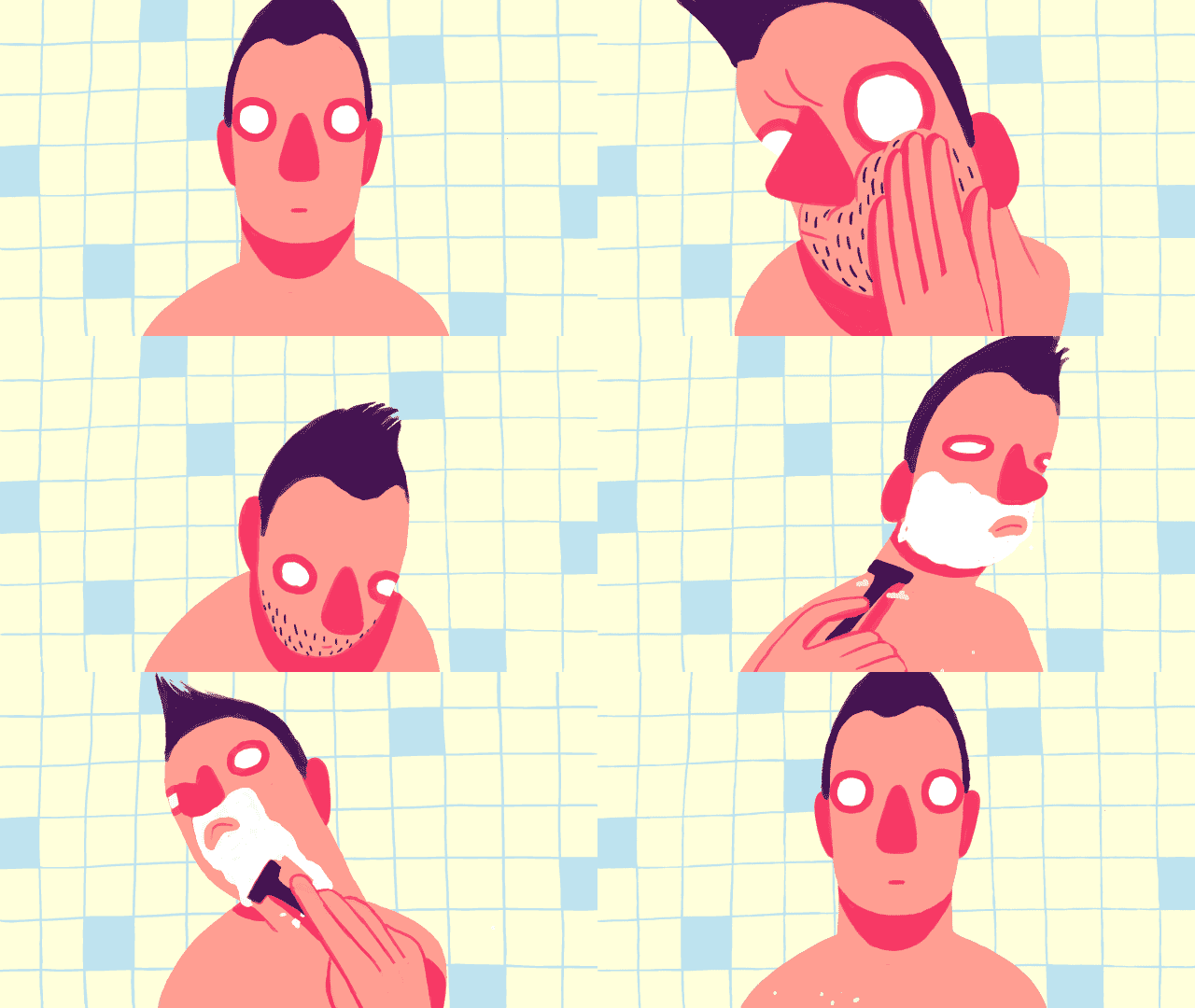
It seems like a lot, but people are asking me if I'm selling it or where to get it..... but I don't have enough to sell! LOL. Next year, if everything goes well, I should produce a lot more. Having frames with already drawn-out comb will help a lot. They have to consume 8 grams of honey to produce 1 gram of wax..... so if they don't have to produce as much wax, that's more honey they can put away. That's part of what makes starting out hard, and why 2nd, 3rd, and 4th year keepers have an easier time. Given the same amount of hives you should be able to produce more honey.Awesome stuff KJ. SO much honey.
And this honey will give me plenty of trial and error for learning to produce mead. And I'll have a better idea of exactly how much I'll need to for mead next year, and then I can sell the surplus.
Most of the plastic bottles we're using as gifts for family and friends.

Hmmmmm Spider’s Hot Honey!!!
Apparently we are not Friends here at the Cadre which means Family……Most of the plastic bottles we're using as gifts for family and friends.

People going to be throwing bribes Rudolf's way to be KJ's Santa buddy.Apparently we are not Friends here at the Cadre which means Family……


My son has made mead. I haven't tried any (that I recall) but he seems to enjoy it. Getting the proportions rigth is key to getting the alcohol percentage where you want it. He made a batch a year or so back and life got REALLY complicated for him so he didn't care for it at the times it needed his attention so it turned to vinegar. In any case his mead projects have made for many an enjoyable multi-night D&D dession with friends.It seems like a lot, but people are asking me if I'm selling it or where to get it..... but I don't have enough to sell! LOL. Next year, if everything goes well, I should produce a lot more. Having frames with already drawn-out comb will help a lot. They have to consume 8 grams of honey to produce 1 gram of wax..... so if they don't have to produce as much wax, that's more honey they can put away. That's part of what makes starting out hard, and why 2nd, 3rd, and 4th year keepers have an easier time. Given the same amount of hives you should be able to produce more honey.
And this honey will give me plenty of trial and error for learning to produce mead. And I'll have a better idea of exactly how much I'll need to for mead next year, and then I can sell the surplus.
Most of the plastic bottles we're using as gifts for family and friends.
I'm not a big honey guy but my doc suggested I eat a spoonful of LOCAL WILD honey several days a week to prevent allergies. Apparently the local pollen turned to honey is a good way to essentailly vacinate against environmental allergies. I did this and it seemed to help but some of my most severe allergies are caused by things that release pollen around September so the honey I buy may not contain the stuff that prevents those allergies.
I am most interested in how your local garden will influence the flavor of your honey and any mead you produce.
I was just talking to someone yesterday about this fact. What you want to try to find is a fall honey. Some beekeepers collect honey at different times of the year (Spring, Summer, and/or Fall). Each will be a different color and have a different flavor based on what flowers/trees are out at those times. Many beekeepers do not collect spring honey, because at those times, their bees are putting away stores in their brood chamber. They want the brood chamber full so they can focus on late spring/summer honey collection. But those that do make spring honey get a very light colored (sometimes close to clear) and very floral tasting. Black Locust is a good producer of nectar for honey in the spring. Many keepers also feed their bees (sugar water) in the spring to help them boost their stores quicker, and ensure the bees always have a source of 'nectar' even if the weather is bad and they aren't going out foraging. You never want to be collecting honey if you are feeding. You get what we call funny honey, because it's made from sugar water.some of my most severe allergies are caused by things that release pollen around September so the honey I buy may not contain the stuff that prevents those allergies.
Most focus on the summer honey, which is usually heavy in clover, but depending on the location could have a nice floral taste as well. Summer honey is the typical Light to dark amber color.
Fall honey again, can be rare because not everyone collects it, for a couple reasons. One reason is that when the summer harvest is complete, many keepers immediately start treating their hives for mites. You can't be collecting honey white treatments are in place. Also, in the summertime we often hit a dearth, where nothing is blooming so the bees have nothing to bring in. During that time they are using up their stores and often are being fed to supplement. When the fall flow hits, they are letting the bees keep it all, so they can put away enough stores to get them through the winter. Those who do collect fall honey get a darker honey from dark amber to brown, that is very rich and sweet, but not much depth of flavor (depending). It can have an off-putting fragrance depending on what is blooming (like goldenrod). But this is what you want to seek out for help with your fall allergies.
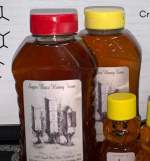
Here one example of summer and fall honey colors:
I didn't do a garden at all this year, but hope to next year. I wouldn't think that anything in the garden would be enough to really affect the taste of the honey. The area of the garden is so small in comparison to the total area they cover. It takes a trip to 2 million flowers to make 1 pound of honey. The number of flowers in my garden is insignificant by comparison.I am most interested in how your local garden will influence the flavor of your honey and any mead you produce.
So it’s been a while since I’ve updated, but the bee-work has been slow especially now that winter is here. But I did make a new label for our honey. The coffin shape is more fitting of us, and it’s easier to cut out of the sheets, since I’m doing this manually. But instead of the ghetto labels I was using before, I found vinyl sticker paper for the printer that makes it all super easy.
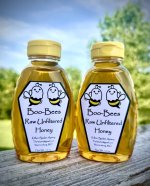
And out of necessity, I started making my own lip balm, beard balm, and moustache wax using the wax from the cappings from my honey supers. And even though our output this year was relatively small, I’m still selling a decent amount of bottles locally, and found a local antique store that wants to carry my surplus. I just dropped it off to them today, so we’ll see how many ch traction I get in the community. In this small community there are 2-3 other honey producers selling at local shops, and in the next (bigger) town over there are at least 8 more. It’s a tough market for honey, and me being small and new, can’t sell as cheap as some of my competitors, but I feel that my honey is superior to many of them, and I’m producing side wax products that none of them do, do that gives me an edge. I’ve had a great response to my lip balm so far. And I intend on branching out to other products that have a wider appeal, realizing the niche market that beard/moustache products are.
And out of necessity, I started making my own lip balm, beard balm, and moustache wax using the wax from the cappings from my honey supers. And even though our output this year was relatively small, I’m still selling a decent amount of bottles locally, and found a local antique store that wants to carry my surplus. I just dropped it off to them today, so we’ll see how many ch traction I get in the community. In this small community there are 2-3 other honey producers selling at local shops, and in the next (bigger) town over there are at least 8 more. It’s a tough market for honey, and me being small and new, can’t sell as cheap as some of my competitors, but I feel that my honey is superior to many of them, and I’m producing side wax products that none of them do, do that gives me an edge. I’ve had a great response to my lip balm so far. And I intend on branching out to other products that have a wider appeal, realizing the niche market that beard/moustache products are.

richgem
Shave Member
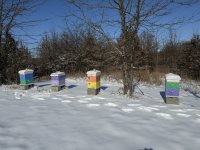
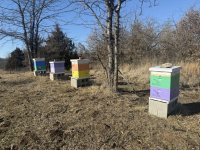
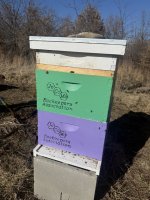
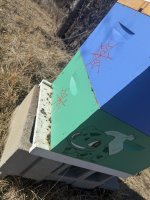
So I just read about what bees do during the winter and learned quite a bit. I assumed that they hibernated.It got up to 60*F today, so I went out to see what the buzz was about. All 4 hives have made it through winter so far. Looking forward to spring!
View attachment 155500View attachment 155501View attachment 155502
What Happens to Bees in the Winter? - Backyard Beekeeping
In order to prepare your hives, it’s important to understand what happens to bees in the winter and how your climate affects them.
backyardbeekeeping.iamcountryside.com

So I just read about what bees do during the winter and learned quite a bit. I assumed that they hibernated.
What Happens to Bees in the Winter? - Backyard Beekeeping
In order to prepare your hives, it’s important to understand what happens to bees in the winter and how your climate affects them.backyardbeekeeping.iamcountryside.com